Bread has been part of the human diet for more than 30,000 years. It has evolved from simple flatbreads made with crushed grains and water to the wide variety of loaves lining grocery store shelves today.
What has changed most isn’t the shape, it’s the ingredient list.
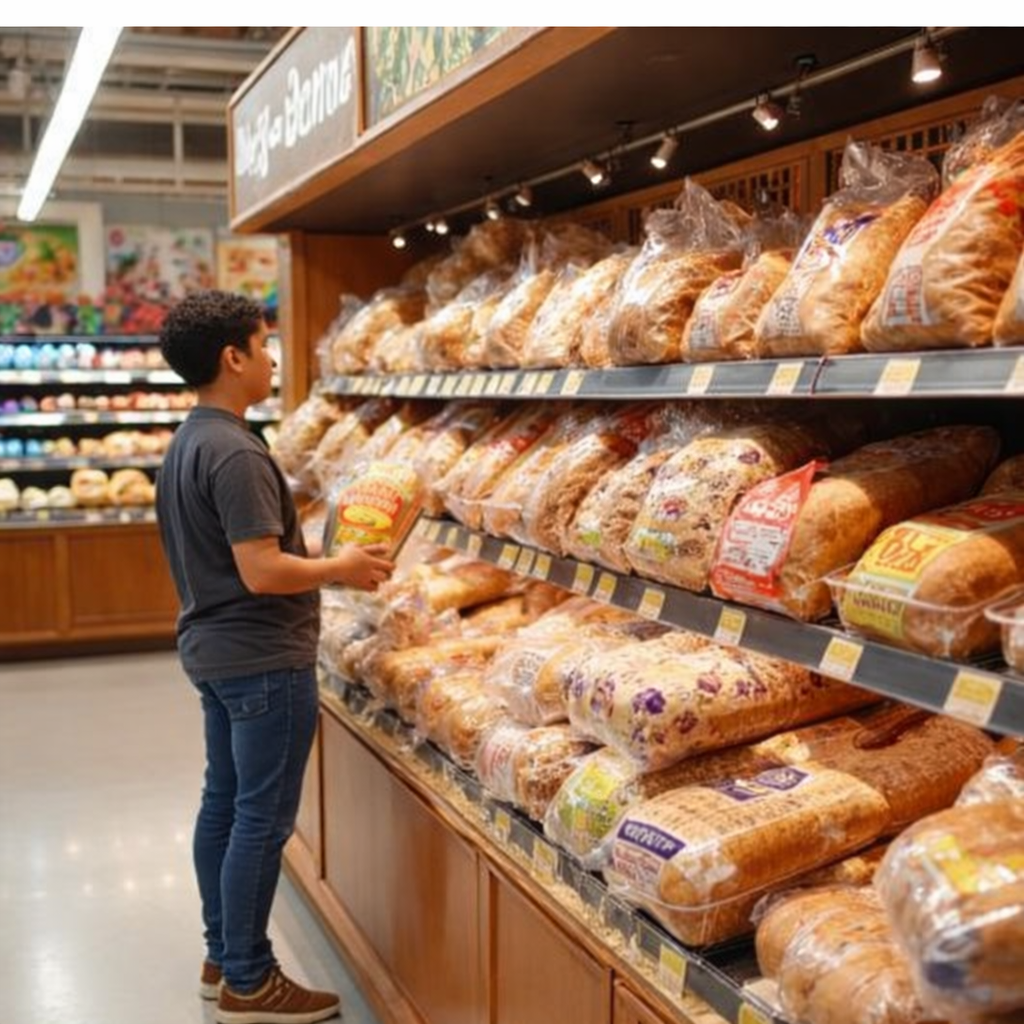
What was once just flour, water, and yeast can now include preservatives, dough conditioners, added sugars, oils, and other ingredients most of us can’t pronounce.
So where does bread fall?
Is it unprocessed, minimally processed, or ultra-processed?
The honest answer is: it depends.
And once again, the ingredient label tells us the real story.
Why Bread Isn’t Automatically Ultra-Processed?
Bread is processed. There’s no way around that. Flour has been milled. The dough is mixed and baked. That alone means it’s not “unprocessed.”
But processing and ultra-processing are not the same thing.
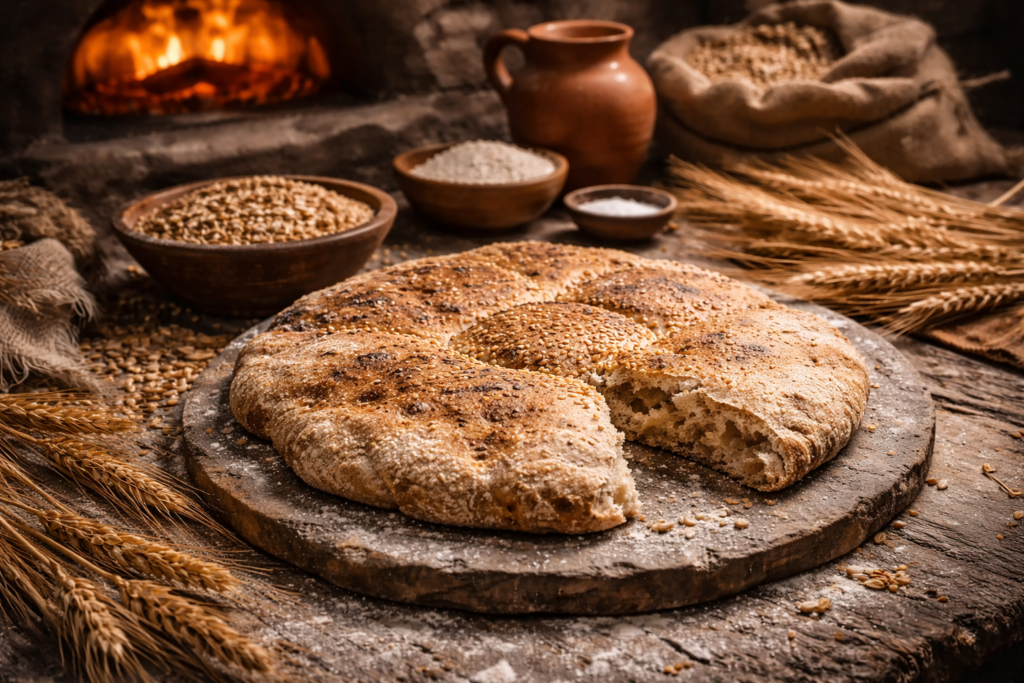
A simple loaf made with flour, water, yeast and salt is considered minimally processed. The structure of the grain has changed (it’s milled into flour), but the ingredients are recognizable and straightforward.
This is the kind of bread humans have eaten for thousands of years.
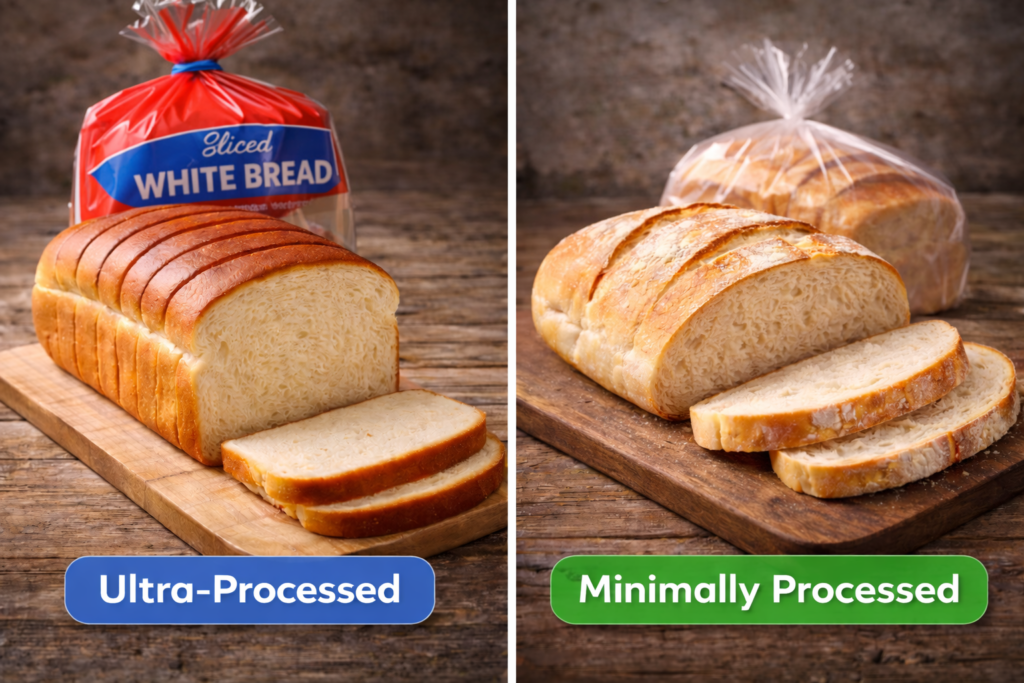
When Bread Becomes Ultra-Processed
Bread shifts into ultra-processed territory when it contains ingredients designed to:
- Extend shelf life
- Enhance flavor artificially
- Improve texture unnaturally
- Replace traditional fermentation
Common signs of ultra-processed bread include:
- High-fructose corn syrup
- Soybean or canola oil (especially multiple oils)
- Mono- and diglycerides
- DATEM
- Calcium propionate
- Artificial flavors
- Added colorings
If the ingredient list reads more like a science experiment than a recipe, that’s your clue.
Ultra-processed breads are typically:
- Very soft and uniform
- Extremely long-lasting on the shelf
- Highly engineered for texture
What About Whole Wheat Bread?
This is where things get confusing.
Some whole wheat breads are minimally processed. Others are ultra-processed with whole wheat flour added in.
The words “whole grain” or “multigrain” on the front of the package don’t tell you much.
Instead, look for:
- A short ingredient list
- Whole wheat flour listed first
- No added sugars or minimal added sugar
- No preservatives like calcium propionate
Again, the ingredient list tells the real story.
Sourdough: A Different Category?
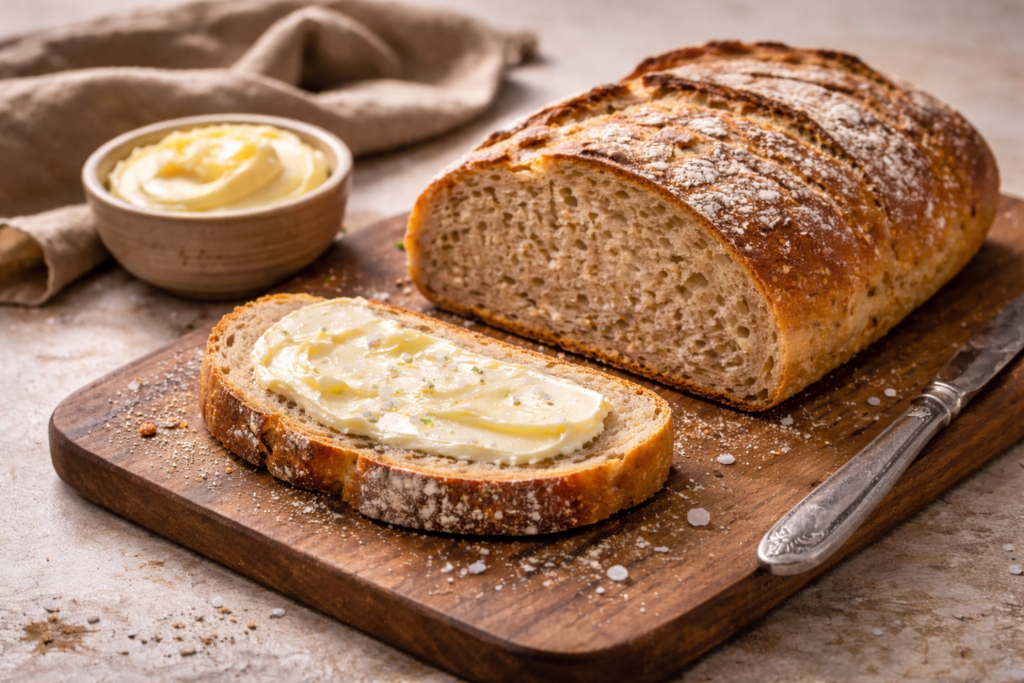
Traditional sourdough made with flour, water, salt and a natural starter is minimally processed and often easier to digest because of the fermentation process.
But grocery store sourdough isn’t always traditional. Some versions contain yeast, additives, and preservatives.
The word “sourdough” doesn’t automatically mean less processed.
Bread Isn’t the Enemy
Many people feel stuck when it comes to bread. For years it’s been labeled “bad,” “fattening,” or something you should avoid, especially if you’ve ever dipped a toe into low‑carb dieting. Add the conversation about ultra‑processed foods on top of that, and it’s no wonder bread feels confusing.
It’s easy to slip into all‑or‑nothing thinking:
- “All bread is bad.”
- “If it’s not homemade, I shouldn’t eat it.”
- “Maybe I should just avoid it entirely.”
But food doesn’t have to be approached in extremes. The real goal is simply awareness, understanding what you’re choosing and why, without fear or guilt.
A Simple Way to Evaluate Bread
Here’s a practical approach:
- Turn the package over.
- Read the ingredient list.
- Ask yourself:
- Do I recognize these ingredients?
- Could this reasonably be made in a kitchen?
- Is the list relatively short?
If yes, you’re likely looking at a minimally processed bread.
If the list is long and filled with stabilizers, conditioners, and added sugars, it’s likely ultra-processed.
Is There a Place for Ultra-Processed Bread?
Real life matters.
Budget constraints, food access, time, and family preferences all play a role in what ends up in your cart.
If ultra-processed bread is what fits your life right now, that doesn’t mean you’ve failed. I understand, my youngest loves to eat my homemade bread when I make it but it won’t touch it in a school lunch. That is real life.
Appreciating the difference between ultra-processed and minimally processed bread should simply give you options, not pressure.
And if you ever want to try making bread, it’s not expensive or nearly as hard as it seems, just a bit time‑consuming. The bonus: your home will smell incredible. I’ll share a simple recipe soon.
So, Is Bread Ultra-Processed?
It can be — and the easiest way to find out is to look at the ingredient list.
Don’t let the presence of ultra‑processed bread in stores scare you away from eating bread. When bread is minimally processed, it fits beautifully into a balanced diet.
Understanding the difference puts you back in control.